April 12, 2026 • Marlowe Finch • 9 min reading time • Prices verified June 4, 2026
Weber Kettle Portable Lineup: Smokey Joe vs. Jumbo Joe vs. Go-Anywhere, Honestly Compared
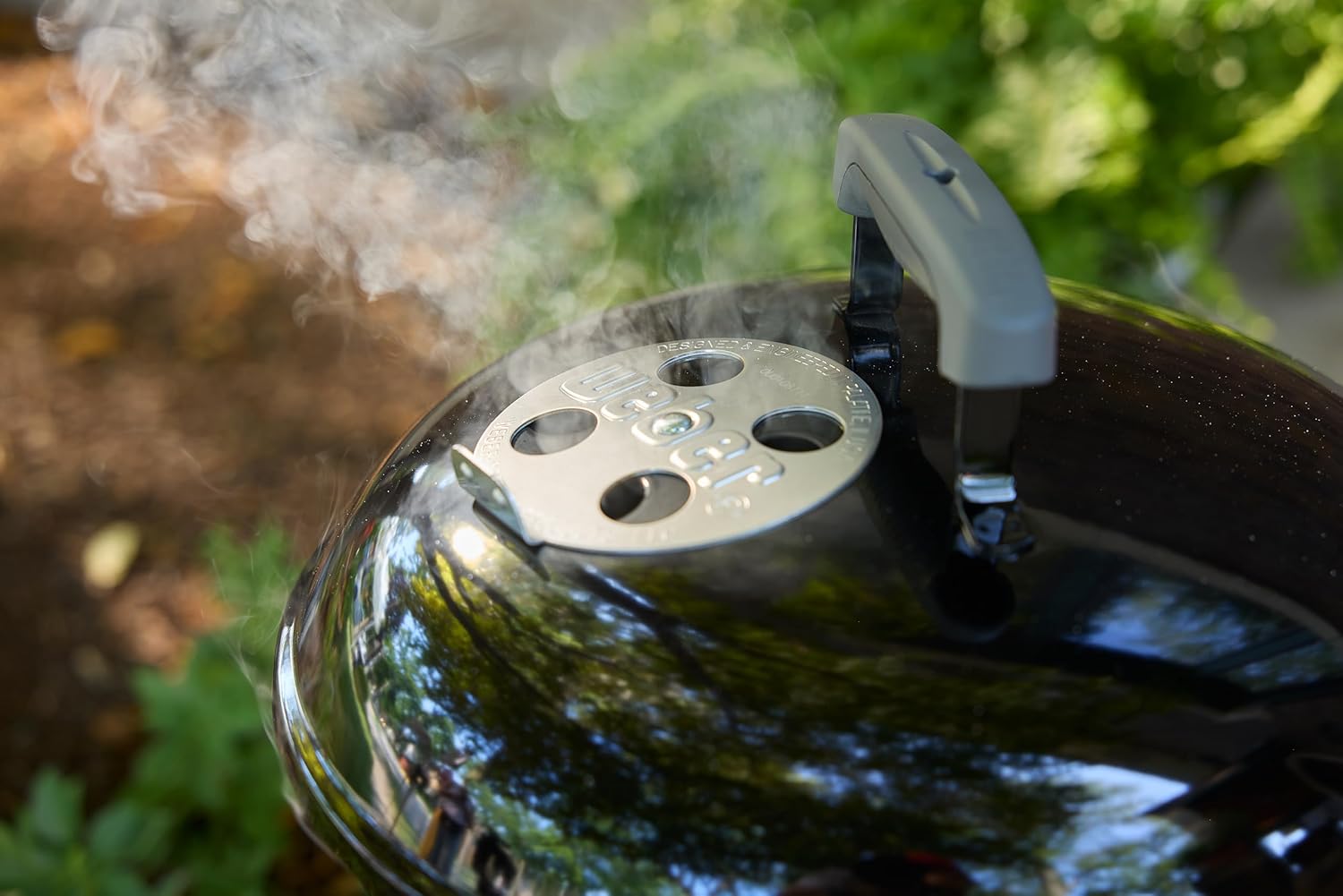
If you’ve ever stood in a sporting goods aisle staring at three nearly identical Weber charcoal grills and wondered what the actual difference is, this article is for you. Weber’s portable kettle family — the Smokey Joe, the Jumbo Joe, and the Go-Anywhere — all work on the same fundamental principle: charcoal sits in a bowl, you light it, and the heat cooks food on a grate above it while a lid traps that heat and lets you control airflow through adjustable vents. Simple, proven, virtually indestructible. But “portable charcoal grill” covers a lot of ground, and each of these three models is genuinely optimized for a different situation. Buy the wrong one and you’ll either be cramped at a tailgate or hauling unnecessary bulk on a backpacking trip. This guide lays the tradeoffs flat, shows you the numbers that matter, and ends with a clear decision rule for each use case.
The Three Grills at a Glance: What the Spec Sheets Actually Tell You
Let’s start with the hard numbers, because the marketing copy for all three models sounds nearly identical and the dimensions are where the real story lives.
By the numbers (2025 Weber published specifications):
| Model | Cooking Area | Total Weight | Packed Footprint | Street Price (May 2026) |
|---|---|---|---|---|
| Smokey Joe 14” | 147 sq in | 10 lbs | ~14” diameter, ~12” tall | ~$39–$49 |
| Jumbo Joe 18” | 240 sq in | 14.3 lbs | ~18” diameter, ~14” tall | ~$69–$79 |
| Go-Anywhere | 160 sq in | 13.2 lbs | 21” × 12.5” × 7” folded | ~$59–$69 |
That cooking area number — measured in square inches — is the honest benchmark for how much food you can actually fit on the grate at one time. The Smokey Joe’s 147 square inches handles roughly four burgers or two whole chicken halves. The Jumbo Joe’s 240 square inches — a 63 percent increase — shifts the ceiling to six to eight burgers or a spatchcocked three-pound chicken with room to maneuver. The Go-Anywhere sits between them in area but has a radically different shape (rectangular rather than round), which changes what fits and how you cook.
Wirecutter’s portable charcoal grill guide (Wirecutter / New York Times, “The Best Portable Charcoal Grills”) consistently flags cooking area as the most underestimated spec in this category, noting that buyers routinely underestimate how fast a small grate fills up once you factor in a two-zone fire — one side loaded with coals for direct, high-heat searing and one side left clear as a cooler zone where food can finish without burning.
Head-to-Head: Each Grill on Its Own Terms
The Smokey Joe: The Benchmark Lightweight, With Real Limits
Weber
$12.98
In stock on Amazon
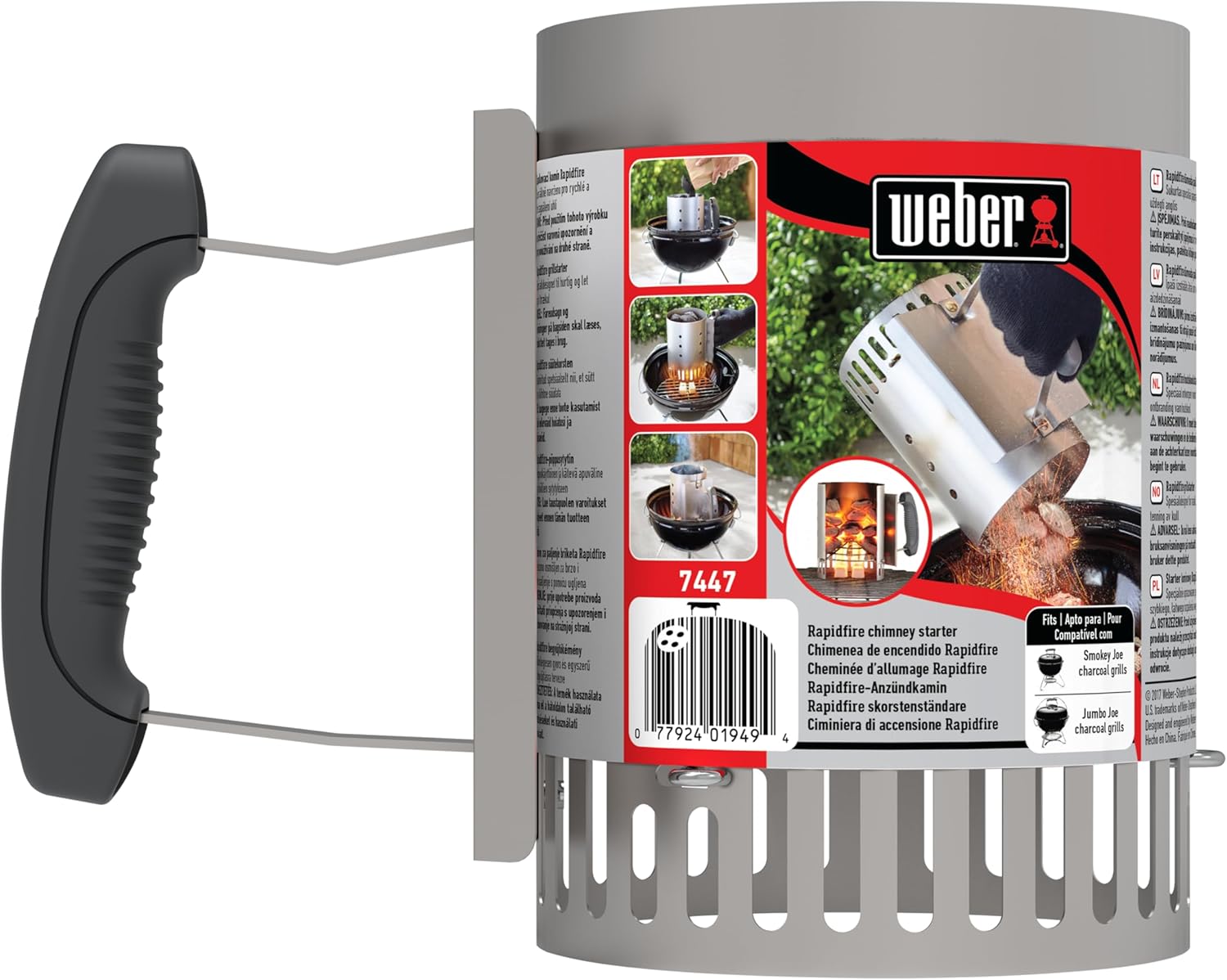
Check price on AmazonThe Smokey Joe has been in continuous production for decades, and that longevity tells you something: it works. At roughly ten pounds and priced under $50, it’s the entry point for the Weber portable ecosystem. AmazingRibs, in their long-standing review of the Smokey Joe (amazingribs.com, “Weber Smokey Joe Review”), notes it is one of the few grills in this price range that holds its damper vent tolerances well enough to actually manage a two-zone fire — something most cheap portables cannot do reliably.
The case for the Smokey Joe is simple: if you’re cooking for one to two people and the grill needs to fit inside a daypack, a bike pannier, or a small car trunk alongside a full camping kit, nothing in this lineup competes on packability. Owners consistently report that it fits in a reusable grocery bag for transport and stores under a seat.
The case against it is equally simple: you will run out of grate before you run out of appetite at anything larger than a two-person cookout. Outside Online’s portable grill roundup (Outside Online, “Best Portable Grills for Camping”) specifically calls out the Smokey Joe’s cooking area as a hard constraint for group cooking, noting that owners frequently report having to cook in multiple batches at tailgates or campsite dinners — which defeats much of the social purpose of grilling together.
There’s also a wind sensitivity issue worth naming. The Smokey Joe’s relatively shallow bowl means coals sit closer to the open air, and in even moderate breezes — 10 to 15 mph — temperature management becomes noticeably harder. A simple windbreak fixes it, but owners in exposed sites (beaches, open campsites, rooftop decks) flag this consistently in long-run use.
Best honest fit: Solo traveler, bikepacking, ultralight camping, one-to-two-person apartment balcony cooking where space is the binding constraint. If you’re cooking for three or more people even occasionally, move up.
Weber
$12.98
In stock on Amazon
Check price on AmazonThe Jumbo Joe: The One Most Buyers Should Probably Choose
Weber
$89.99
In stock on Amazon
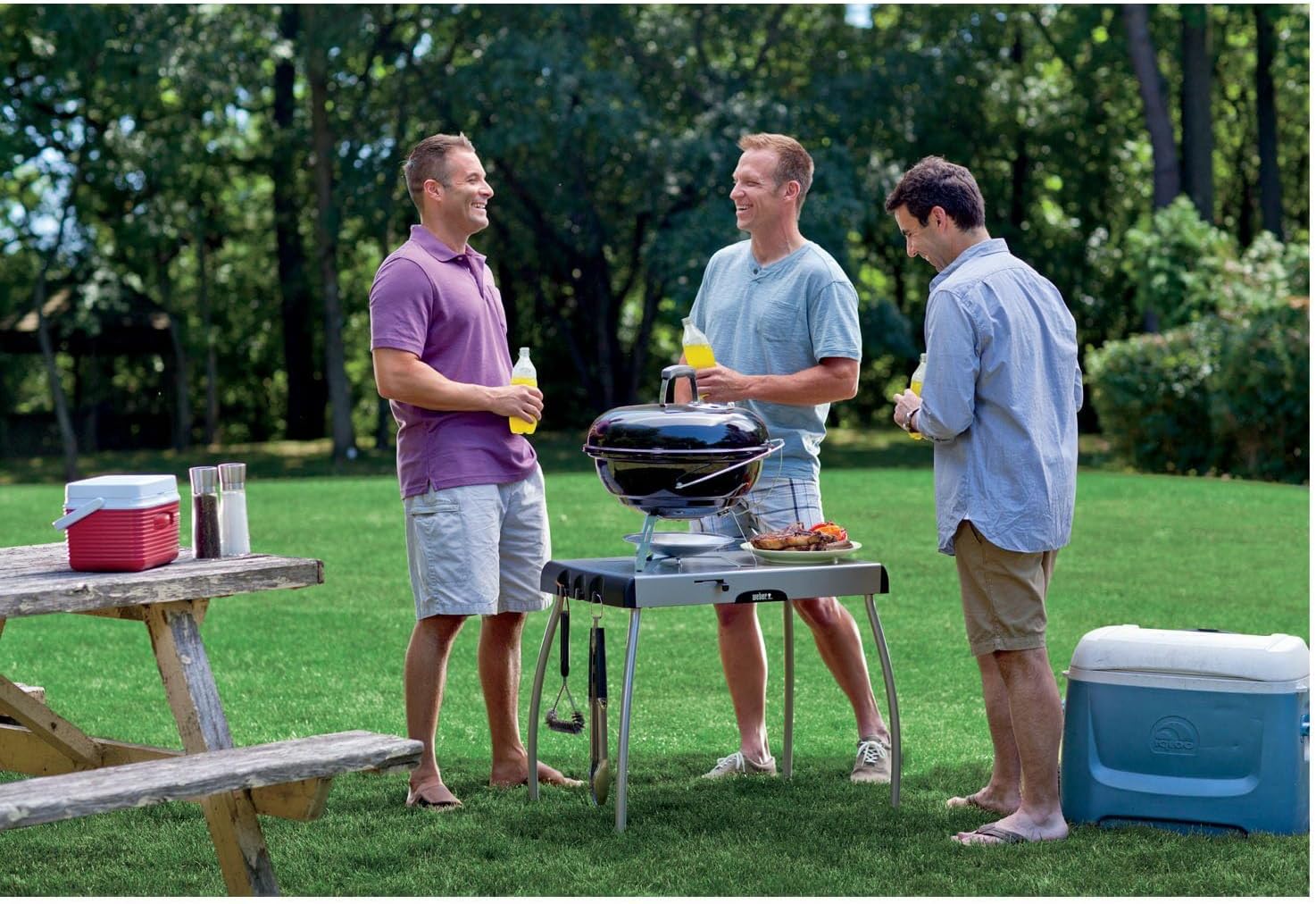
Check price on AmazonThe Jumbo Joe is the Smokey Joe’s bigger sibling in the most literal sense — same bowl design, same vent system, same lid, just scaled from 14 inches to 18 inches in diameter. That four-inch difference sounds modest on paper, but the cooking area math shows a 63 percent jump in usable grate space. In practical terms, that’s the difference between cooking in batches and cooking a full meal at once.
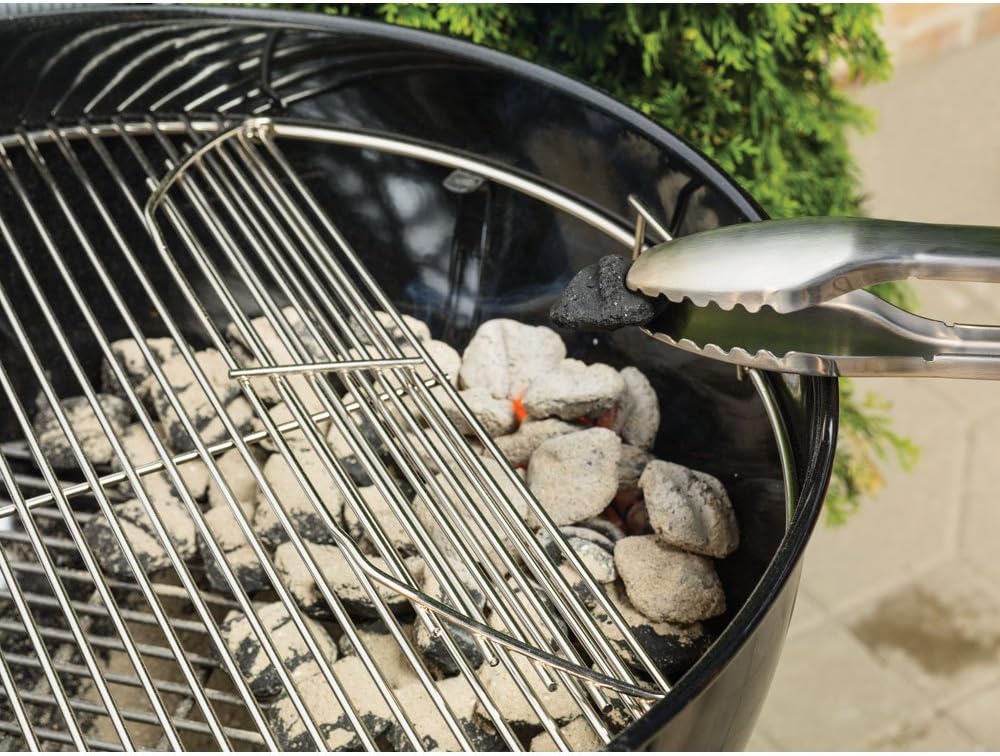
Serious Eats’ portable grill coverage (Serious Eats, “The Best Portable Grills, Tested and Reviewed”) consistently highlights the 18-inch kettle format as the sweet spot for group-capable portables, specifically because the extra diameter is what finally makes a proper two-zone fire functional rather than theoretical. On a 14-inch grate, a two-zone setup leaves so little room on the cool side that it barely functions. On 18 inches, you can actually park a thick pork chop over indirect heat and let it ride while your direct-heat zone handles burgers simultaneously.
The Jumbo Joe adds about four pounds over the Smokey Joe, which at 14.3 total pounds remains genuinely carry-able. The diameter increase does matter for packing — it won’t fit under a car seat, and in a small hatchback it takes up meaningful cargo space. But owners report it slides comfortably into a mid-size vehicle cargo bay, a truck bed, or a van galley shelf without dominating the space.
The price premium over the Smokey Joe — roughly $25 to $35 at May 2026 street prices — is almost certainly the easiest upgrade justification in this lineup. The total five-year cost of ownership across grill and charcoal is essentially identical; the only variable is the extra $30 upfront.
One honest limitation: the Jumbo Joe’s round kettle form factor is less efficient for cooking proteins arranged in a row, like sausage links or a rack of ribs cut into sections. For that kind of cook, the Go-Anywhere’s rectangular grate has a real edge.
Best honest fit: Tailgates, campsite group cooking for three to five people, balcony setups where you’re entertaining at least occasionally, van-lifers who cook for two and want genuine capacity margin. This is the default recommendation for most buyers in this lineup.
Weber
$89.99
In stock on Amazon
Check price on AmazonThe Go-Anywhere: The Specialist That Earns Its Keep in the Right Context
Weber
$219.00
In stock on Amazon
Check price on AmazonThe Go-Anywhere is the odd one out, and that’s actually its value proposition. Where the Smokey Joe and Jumbo Joe are round kettle grills scaled up and down from the same template, the Go-Anywhere is a rectangular, clamshell-lid design with folding legs that lock the lid shut for transport. At 21 inches long when closed, it’s shaped more like a small briefcase than a grill, and that shape has real consequences for how it packs and what it cooks.
The rectangular grate (160 square inches) is slightly larger than the Smokey Joe’s and smaller than the Jumbo Joe’s, so it’s not winning on raw area. What it wins on is form-factor compatibility. Wirecutter’s portable charcoal grill guide (Wirecutter / New York Times, “The Best Portable Charcoal Grills”) specifically calls out the Go-Anywhere as the best fit for situations where rectangular storage space is available but circular footprints are awkward — the classic example being a vehicle’s cargo floor alongside other rectangular gear cases, a kayak hatch, or a flat storage compartment under a van bench.
The locking lid is legitimately useful for transport when you want to move a grill that still has ash in the bowl. The Go-Anywhere contains the mess in a way the kettle designs don’t. Owners who do multi-site camping — moving camp every day or two — consistently rate this feature as underappreciated.
The tradeoff is that the Go-Anywhere’s rectangular firebox is shallower than the Jumbo Joe’s bowl, which limits your charcoal pile depth and makes sustained high-heat cooks — anything over an hour — require more active coal management, meaning adding fuel mid-cook rather than building a large initial load. Serious Eats (Serious Eats, “The Best Portable Grills, Tested and Reviewed”) notes this as a consistent pattern in owner reports: the Go-Anywhere excels at fast, high-heat cooks such as searing, grilling vegetables, and fish, but requires more attention on longer, lower-temperature cooks like bone-in chicken pieces.
At roughly the same price as the Jumbo Joe, the Go-Anywhere is not the budget option — it’s the shape-optimized option. Don’t buy it because it’s different. Buy it because the rectangle specifically solves a packing problem you actually have.
Best honest fit: Multi-site camping where containment matters, kayak camping or canoe-tripping, van or truck setups with rectangular storage compartments, cooks who primarily do fast searing and fish rather than low-and-slow work.
Weber
$219.00
In stock on Amazon
Check price on AmazonThe Decision Rule, Made Explicit
If you’re still deciding, run through this sequence:
Does your primary transport space reward a rectangle over a circle? If yes — van galley, kayak hatch, long truck toolbox — consider the Go-Anywhere seriously. If not, move on.
Are you regularly cooking for three or more people, or do you want a two-zone fire that actually works? If yes, the Jumbo Joe is the answer. The extra $30 over the Smokey Joe pays for itself the first time you don’t have to cook in batches.
Is weight or packability the absolute binding constraint — not comfort, not convenience, but necessity? Bikepacking, ultralight hiking, strict weight limits — then the Smokey Joe is your grill. Accept the cooking area tradeoff with clear eyes.
A Word on Long-Term Ownership That Most Comparisons Skip
All three of these grills share Weber’s broad replacement-parts ecosystem. Grates, ash catchers, and damper assemblies are stocked at major retailers and are interchangeable within size families. AmazingRibs’ long-term ownership coverage on Weber kettle portables (amazingribs.com, “Weber Smokey Joe Review” and related kettle coverage) consistently cites parts availability as a meaningful long-term value signal that cheaper competitors can’t match. You’re not buying a grill that becomes a landfill item the moment one component breaks.
That parts longevity is embedded in the price premium Weber commands over generic portables, and for most buyers in this category, it’s worth it. A $45 grill you replace every two seasons costs more over five years than a $70 grill whose grate you swap for $12 when it finally rusts through.
Buy the size that fits your group. Buy the shape that fits your storage. Everything else is details.