May 20, 2026 • Marlowe Finch • 9 min reading time • Prices verified June 4, 2026
The Real 5-Year Cost of a Premium Pellet Grill: Traeger, Camp Chef, and Pit Boss Compared
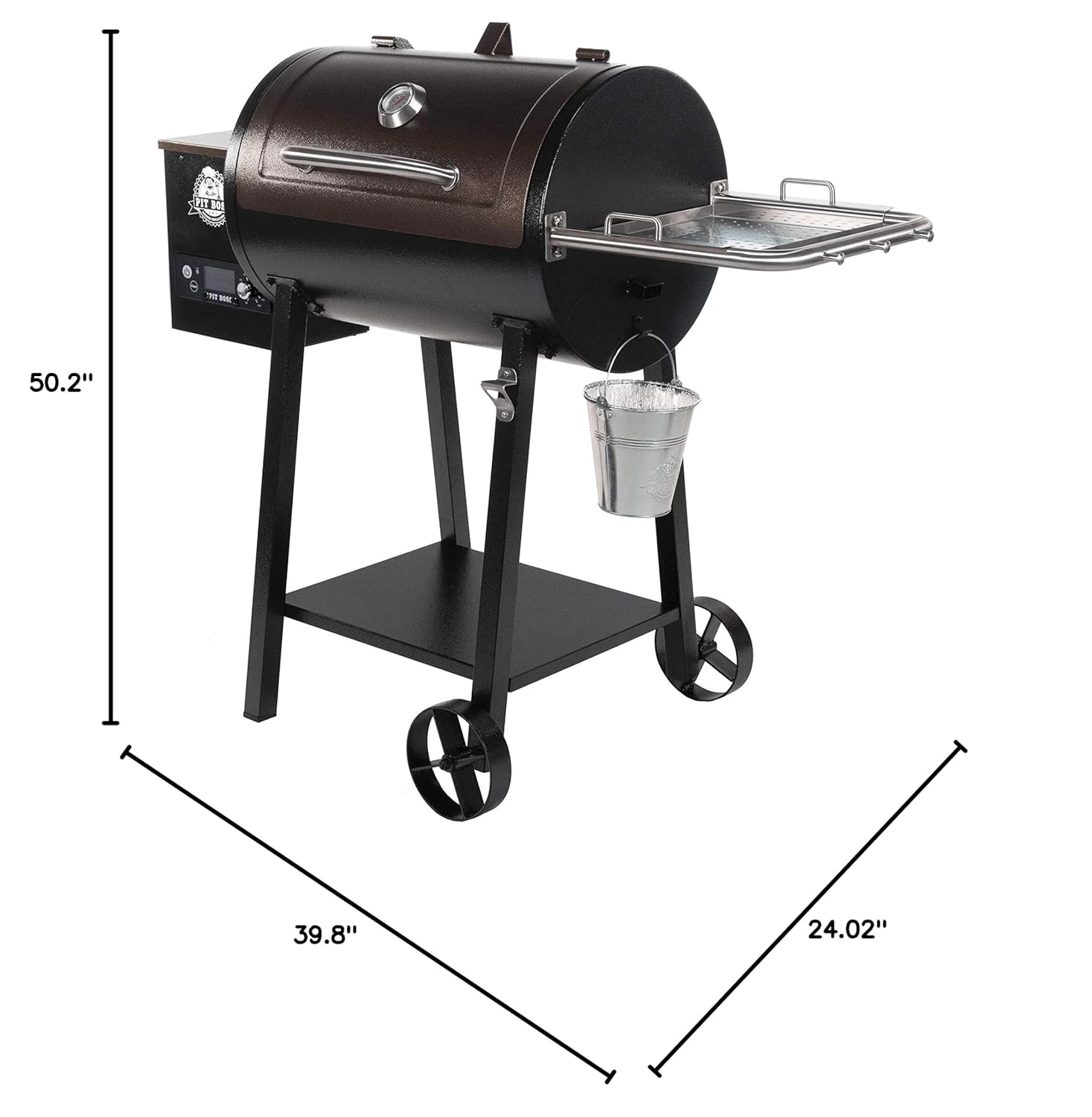
A pellet grill is a smoker and grill in one unit that feeds small compressed wood pellets — think rabbit-food-sized cylinders made from hardwood sawdust — into an internal fire pot automatically, controlled by a digital thermostat. You set a temperature, and the grill maintains it the way an oven does, which is why they’ve become the “set it and forget it” favorite for backyard cooks who want real smoke flavor without babysitting a fire. The portable versions — the Traeger Ranger, Camp Chef’s smaller units, Pit Boss’s tailgate-focused models — bring that same convenience to campsites, tailgates, and rooftop decks. If you’re considering dropping $400–$800 on one of these grills, the sticker price is only the beginning of the story. This article builds the full five-year cost picture so you can make a real comparison, not a marketing-brochure comparison.
Why the Sticker Price Is the Wrong Number to Compare
Most buyers anchor on purchase price and stop there. That’s understandable — a $349 Traeger Ranger and a $397 Pit Boss Sportsman 500 look like a modest difference at the register. But as noted in the Wirecutter review “The Best Pellet Grills” (The New York Times, 2025), running costs can equal or exceed the purchase price within two to three years of regular use, which makes purchase-price comparisons nearly meaningless on their own.
The five-year total cost of a portable pellet grill breaks into four buckets:
- Purchase price — what you pay at the register
- Fuel cost — pellets, priced by the bag and measured by consumption rate
- Accessories and consumables — covers, grill grates, drip trays, fire pots, grease liners
- Repairs and replacement parts — auger motors, igniter rods, control boards, RTD temperature probes
Let’s work through each with real numbers, then stack them up across Traeger, Camp Chef, and Pit Boss.
Pellet Consumption: The Number Every Brand Buries
Pellet consumption rate — how many pounds of wood pellets a grill burns per hour — is where the five-year math diverges fastest between brands, and it’s also the number manufacturers are least eager to advertise clearly.
The physics here are simple: a better-insulated grill with a tight lid seal burns fewer pellets to hold a target temperature, especially in cold or windy conditions. A leaky lid or thin-gauge firebox forces the auger — the corkscrew-shaped mechanism that feeds pellets into the fire pot — to spin more frequently, burning through fuel faster. Serious Eats’ 2024 piece “What Is a Pellet Grill and How Does It Work” makes this point directly, noting that lid seal quality and hopper insulation are the two variables that separate efficient units from fuel-hungry ones in real-world conditions.
Additionally, AmazingRibs.com’s “Pellet Grill Buyer’s Guide” by Meathead Goldwyn specifically flags gauge thickness as a thermal efficiency marker, noting that 14-gauge steel holds heat meaningfully better than 18-gauge steel in sub-50°F conditions — exactly the scenario portable grill buyers face at fall tailgates or high-altitude campsites.
Typical consumption rates, based on published brand specifications and aggregated owner reporting:
| Grill | Approx. Price (2025–26) | Rated Pellet Use (low/high smoke) | Est. Annual Fuel Cost* |
|---|---|---|---|
| Traeger Ranger | $349 | 1–3 lbs/hr | $180–$270 |
| Camp Chef Woodwind Pro 24 | $799 | 1–3 lbs/hr | $175–$260 |
| Pit Boss Sportsman 500 | $397 | 1.5–3.5 lbs/hr | $210–$315 |
*Assumes 80 cooking hours per year — roughly weekly summer use plus occasional off-season sessions — and a pellet price of $18–$22 per 20 lb bag, reflecting mid-2026 pricing for name-brand hardwood blends. Premium single-species pellets such as cherry, pecan, or hickory run $22–$28 per bag and push annual costs higher.
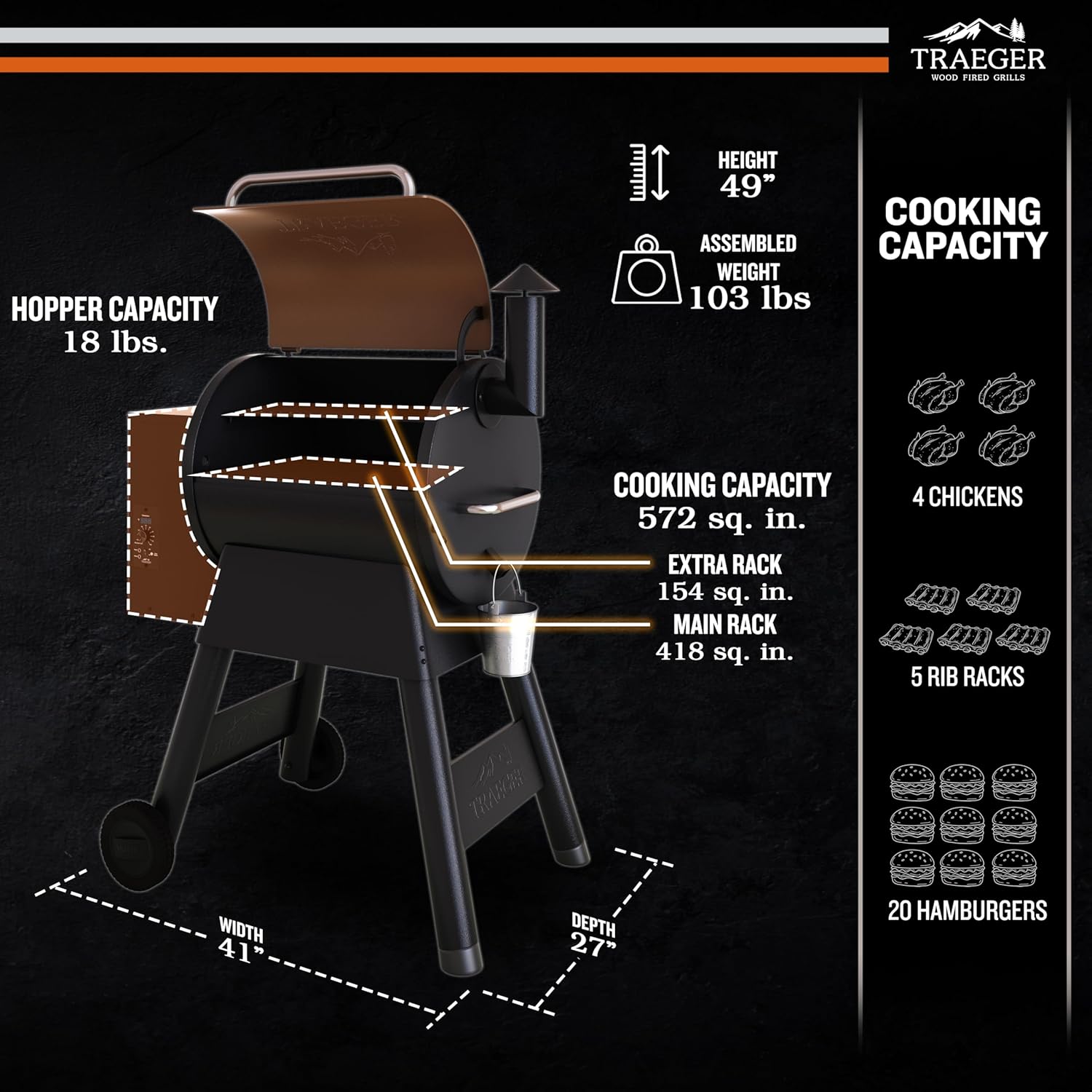
The Traeger Ranger’s compact cooking area — 184 square inches, compared to the Camp Chef Woodwind Pro 24’s 811 square inches — means lower absolute consumption simply because there is less volume to heat. On a per-square-inch basis, however, the Ranger’s smaller firebox can be less efficient when pushed toward high-smoke settings. Owners consistently report the Ranger burning closer to the upper end of its rated range under those conditions.
The Pit Boss Sportsman 500’s slightly higher consumption ceiling reflects its thinner-gauge steel construction. The effect is most pronounced in cold or windy environments, where the grill’s auger compensates by running more frequently to maintain the set temperature.
Parts and Serviceability: The Long-Tail Cost Nobody Talks About
If there is one place where premium pricing genuinely earns its keep over five years, it is parts availability and repairability. Consumer Reports’ 2024 “Pellet Grill Ratings and Reliability Survey” found that pellet grill owners most commonly reported electronic control board failures and auger jams as the primary service issues arising in years two through four of ownership — and the cost delta between brands on those repairs is significant.
Traeger: Strong Parts Network, Proprietary Trade-Off
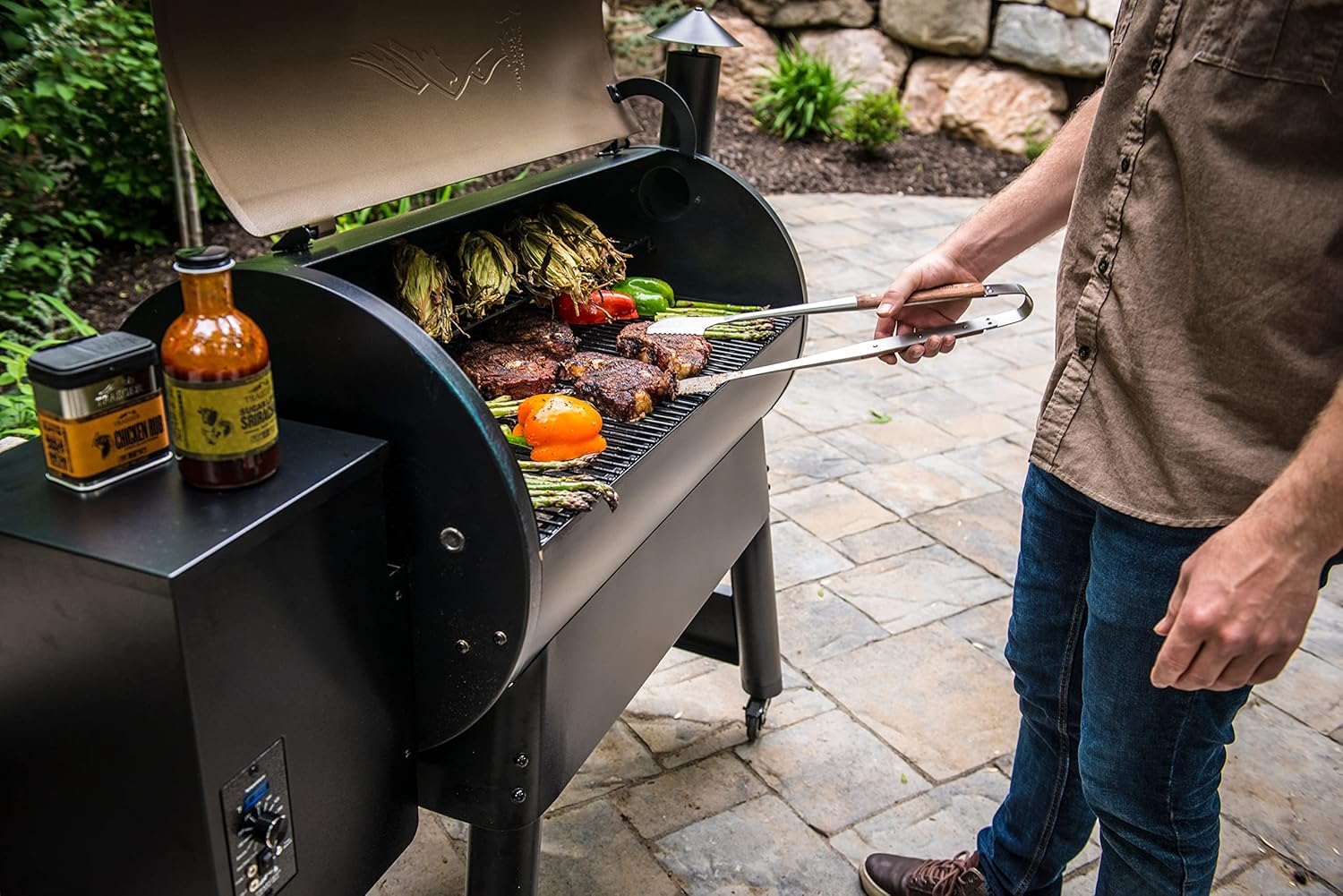
Control boards for the Traeger Ranger run approximately $60–$90 as of 2025–26. Auger motors list around $45–$70. Traeger’s parts ecosystem is the most developed of the three brands reviewed here, with widespread availability through their own channels and major retailers. The trade-off owners note in long-run reviews is that Traeger’s WiFIRE app-connected control platform means a control board failure on a WiFIRE-equipped model requires a Traeger-branded replacement — there is no third-party substitute, which introduces a modest but real pricing ceiling on repairs. For most buyers, the combination of accessible pricing and broad retail availability makes Traeger the lowest-friction repair experience of the three brands compared here.
Traeger
$499.00
In stock on Amazon
Check price on AmazonCamp Chef: Serviceability as a Genuine Differentiator
Replacement parts for Camp Chef models are consistently cited — including in the Wirecutter review “The Best Pellet Grills” (The New York Times, 2025) — as a meaningful differentiator. Camp Chef publishes detailed exploded-parts diagrams for most models and supports independent repair. A Camp Chef igniter rod runs $15–$25; a control board replacement typically lands around $50–$80. Owners in multi-year reviews regularly note that Camp Chef’s customer service responsiveness is unusually strong for a mid-market brand — a meaningful data point for anyone running a grill as a working tool rather than a leisure toy.
The larger cooking surface of the Woodwind Pro 24 also means fewer back-to-back cooks when feeding four to six people, which reduces cumulative wear on the auger and fire pot over a five-year window. For buyers treating this as a working investment, that combination of serviceability and surface area changes the total cost math considerably.
Traeger
$1,799.99
In stock on Amazon
Check price on AmazonPit Boss: Capable Performer, Parts Availability Risk
Pit Boss operates under the Dansons umbrella — the same parent company as Louisiana Grills — and parts availability has historically been a mixed picture. Auger motors and igniters are generally stocked through the product’s active retail window, but control board availability for older models can become spotty after year three or four as Pit Boss refreshes its lineup frequently. Barbecuebible.com’s aggregated owner commentary flags this as a legitimate concern for buyers planning to run the same unit through a full five-year window. The brand has a loyal following and delivers solid cooking performance for the price; the risk is concentrated in the back half of ownership, particularly if a control board fails after the model has cycled out of active retail.
Traeger
$389.00
In stock on Amazon
Check price on AmazonThe Full Five-Year Stack: Running the Math
Here is the complete five-year total cost comparison, built from purchase price, fuel, and parts. Accessories — grill covers, extra grates, grease management liners — are held roughly constant across brands at approximately $80 over five years, since they are broadly similar in cost and necessity regardless of brand.
Assumptions:
- 80 cooking hours per year
- Pellets at $20 per 20 lb bag, mid-grade brand
- Low-to-mid consumption rate, moderate weather and regular use conditions
- One major part replacement plus two minor replacements in years two through four
| Brand / Model | Purchase | Pellets (5yr) | Parts (5yr) | Accessories | 5-Year Total |
|---|---|---|---|---|---|
| Traeger Ranger | $349 | ~$1,100 | ~$160 | $80 | ~$1,689 |
| Camp Chef WW Pro 24 | $799 | ~$1,075 | ~$137 | $80 | ~$2,091 |
| Pit Boss Sportsman 500 | $397 | ~$1,260 | ~$155 | $80 | ~$1,892 |
A few things this math surfaces:
The Ranger is the cheapest five-year path if your cooking surface needs are modest. At 184 square inches, it feeds two to three people comfortably. For solo van-lifers or couples who tailgate, the Ranger’s five-year total is genuinely competitive, and Traeger’s parts ecosystem reduces repair-risk variance compared to brands with thinner parts coverage.
The Camp Chef costs the most to buy in, but efficiency and serviceability narrow the gap meaningfully by year five. If you are cooking for four to six people regularly — a realistic scenario for competitive BBQ participants or small-event caterers — the larger cooking surface means you are not running multiple back-to-back cooks, which reduces annual pellet hours. Camp Chef’s lower per-repair cost and better parts availability further de-risk the five-year window.
Pit Boss lands in the middle on price but carries the highest variance. Lower pellet efficiency and parts-availability uncertainty mean the Pit Boss’s five-year number could drift $200–$400 higher than the table above if you encounter a parts shortage on a control board in year four. That is not a reason to rule it out — but it is a reason to go in with clear expectations about the risk profile and to build a contingency buffer into your planning.
Altitude, Wind, and Cold: The Hidden Tax on Pellet Consumption
One cost driver that rarely appears in brand comparisons is environment-dependent fuel burn. At elevation — say, a campsite above 6,000 feet — reduced air density makes combustion less efficient, and the grill’s auger compensates by feeding more pellets to maintain the target temperature. Owners who cook regularly at elevation report burning 20–35% more pellets than at sea level under otherwise equivalent conditions. Applying that range to 80 hours per year at the Pit Boss’s mid-range consumption rate adds approximately $150–$250 in fuel cost over five years.
Wind matters similarly. A portable grill broadside to a sustained 15 mph wind — entirely normal at a tailgate or lakeside campsite — bleeds heat from the firebox faster than the manufacturer’s rated consumption figures anticipate. Grill placement, a windbreak, and lid-seal quality all reduce this effect, but the baseline principle holds: if you cook regularly in exposed environments, budget conservatively on pellets and assume the upper end of the manufacturer’s consumption range is closer to your real number.
The Decision Rule
If you cook for one to three people in varied environments and want the lowest total cost with a strong parts network: the Traeger Ranger is the practical choice. It is not the most capable grill on this list, but the five-year math and parts availability make it the lowest-risk entry into portable pellet cooking.
Traeger
$499.00
In stock on Amazon
Check price on AmazonIf you cook for four or more people regularly, treat your grill as a working investment, or compete in BBQ circuits where cooking surface and temperature precision matter: the Camp Chef Woodwind Pro 24 earns its premium over five years. The higher upfront cost is real; the serviceability advantage and fuel efficiency offset it meaningfully at volume.
Traeger
$1,799.99
In stock on Amazon
Check price on AmazonIf you are budget-constrained at purchase and willing to accept higher fuel costs and some parts-availability uncertainty in exchange for a capable mid-size cooker: the Pit Boss Sportsman 500 is a defensible choice. Build a $200 contingency into your five-year mental budget and consider an extended warranty at point of sale if one is available.
Traeger
$389.00
In stock on Amazon
Check price on AmazonThe sticker price is the wrong number. The five-year stack is the right one. Now you have it.